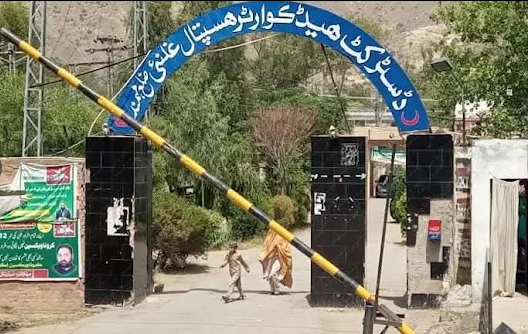
Health Sector — Peshawar Division
Five districts — Peshawar, Charsadda, Nowshera, Khyber, and Mohmand — facility overview, major tertiary and district headquarters (DHQ) hospitals, and Khyber Pakhtunkhwa (KP) health budget context.
Facilities (division total)
Total620Peshawar Division operates a total of 620 public hospitals and primary health facilities across its 5 districts.
Listed categories sum to 470. Additional primary, mobile, and auxiliary health units bring the full census to 620. Counts represent public-sector primary and secondary infrastructure and exclude major Medical Teaching Institutions (MTIs) such as LRH, KTH, and HMC in Peshawar, which function as autonomous tertiary care zones.
This data covers the entire Peshawar Division (5 districts).
Facility breakdown by type and district
| Facility type | Division total | Peshawar | Charsadda | Nowshera | Khyber | Mohmand |
|---|---|---|---|---|---|---|
| DHQ / Major Equivalent | 05 | 01 | 01 | 01 | 01 | 01 |
| THQ / Cat-C & D Hospitals | 18 | 04 | 03 | 04 | 04 | 03 |
| RHCs (Rural Health Centers) | 28 | 06 | 06 | 05 | 06 | 05 |
| BHUs (Basic Health Units) | 212 | 50 | 46 | 36 | 42 | 38 |
| Govt. Dispensaries | 85 | 22 | 18 | 15 | 16 | 14 |
| MCH Centres | 48 | 15 | 10 | 09 | 08 | 06 |
| Sub Health Centers / Auxiliaries | 74 | 20 | 15 | 14 | 13 | 12 |
Facility types — division counts
BHUs by district
Peshawar and Charsadda host the largest BHU networks in the division.
DHQ & THQ by district
Major tertiary reference hubs
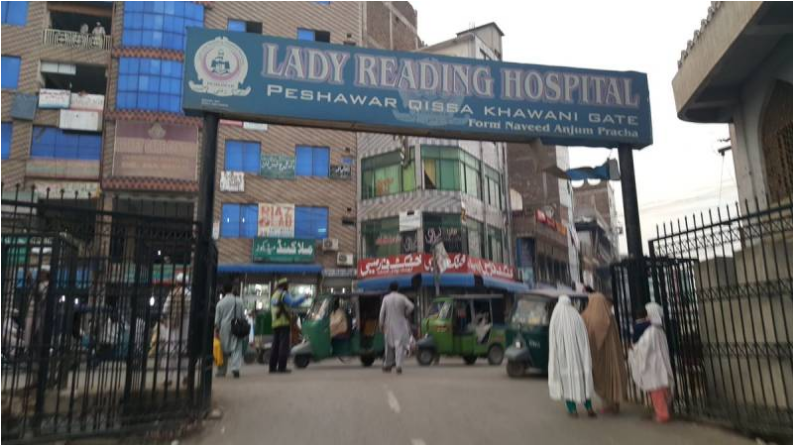
Lady Reading Hospital (LRH) Peshawar
A massive 1,800+ bed tertiary care facility; the largest and oldest public sector hospital in Khyber Pakhtunkhwa. It serves as the primary referral hub for the entire province and neighboring Afghanistan, operating under the MTI (Medical Teaching Institution) reform act with extreme patient loads.
Bed Strength: Authorized total of 1,800 beds (~1,500 operational). Serves an estimated catchment population of over 10 million.
Specialized Departments (30+): General Medicine, General Surgery, Cardiology, Cardiac Surgery, Pediatrics, Gynecology & Obstetrics, Orthopedics, Ophthalmology, ENT, Neurology, Neurosurgery, Nephrology, Pulmonology, Dermatology, Psychiatry, and Emergency Medicine.
Support & Diagnostics: Pathology Lab, Radiology (MRI/CT/X-ray), 24/7 Blood Bank, modern Operation Theatres, Dialysis Unit, and specialized Intensive Care Units (ICUs).
Key Statistics: Serves over 4,000–5,000 OPD patients daily and coordinates upwards of 300 inpatient admissions per day.
Major ward beds
| Unit / Ward | Beds |
|---|---|
| Surgical Wards | 350 |
| Medical Wards | 400 |
| Gynecology & Obstetrics | 220 |
| Pediatrics | 180 |
| Emergency / Trauma Complex | 250 |
| ICUs / CCUs / Specialized Units | 100 |
| Other Specialized Specialties | 300 |
| Authorized Total | 1,800 |
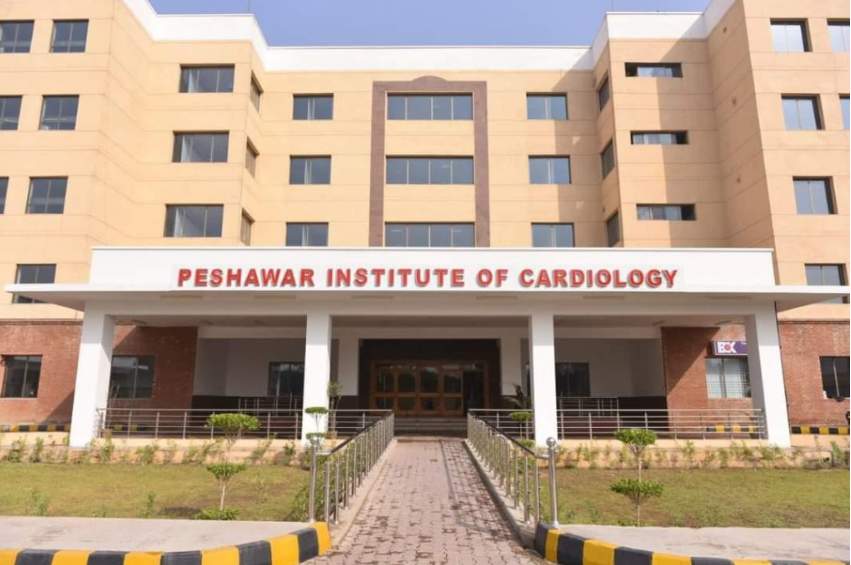
Peshawar Institute of Cardiology (PIC)
An elite, fully operational 339-bed tertiary cardiac facility located in the Hayatabad suburb of Peshawar. Officially inaugurated in December 2020 at an estimated completion cost of Rs. 3 billion, it is the first ISO 9001 certified public cardiac hospital in the province. It serves a catchment of 4–8 million people across KP and neighboring regions.
Core Cardiac Services: 24/7 dedicated cardiac emergency unit; 6 state-of-the-art Cath Labs; 6 dedicated cardiac surgery theatres for pediatric and adult open-heart surgeries; comprehensive OPD covering adult/pediatric cardiology, electrophysiology, and cardiac rehabilitation.
Specialized Diagnostics: Advanced Cardiac MRI, 128-Slice CT Angiography, 3D Echocardiography, and advanced Exercise Tolerance Testing (ETT).
Support Infrastructure: CSSD and infection control units; fully integrated Pathology and Chemical Pathology Labs, blood bank, and clinical pharmacy; patient facilitation wings operating closely with the provincial Sehat Card Plus health insurance program.
Khyber Pakhtunkhwa health budget (context)
The province manages health funding through major development envelopes and MTI grants. Budget figures reflect the provincial resource pool for the fiscal year.
| Item / Program | Allocation (FY 2026–27) |
|---|---|
| Total KP Health Sector Budget | Rs. 334.0 Billion |
| Medical Teaching Institutions (MTIs) Grant | Rs. 80.0 Billion |
| Sehat Card Plus (Health Insurance Program) | Rs. 50.0 Billion |
| Free Drugs & Medicine Provision | Rs. 14.263 Billion |
| Primary Care (BHU & RHC Upgrades) | Rs. 11.0 Billion |
| Category-D Hospital Upgradation Program | Rs. 9.9 Billion |
Secondary care District Headquarters (DHQ) hospitals
DHQ Hospital Charsadda (Category A)
Main secondary care facility for Charsadda District, catering to a population of approximately 1.8 million.
Bed Strength: 210 beds (sanctioned capacity).
Major Specialties: Gynecology, Pediatrics, Emergency Medicine, General Surgery, and Orthopedics.
Key Features: Features an 8-bed Intensive Care Unit (ICU) and operates adjacent specialized wings, including a newly constructed 200-bed Women & Children Hospital block.
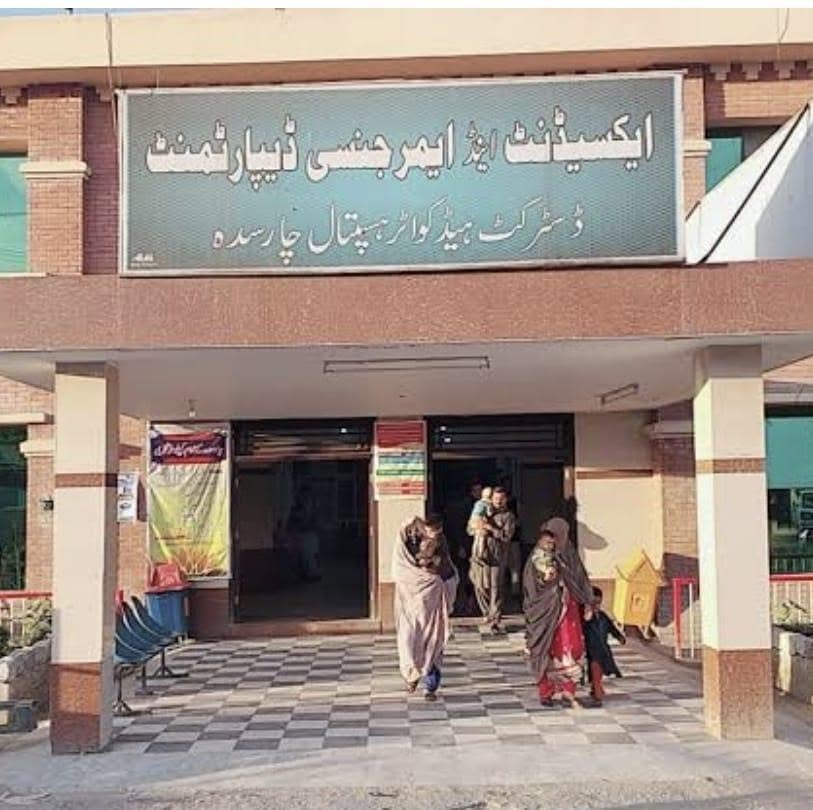
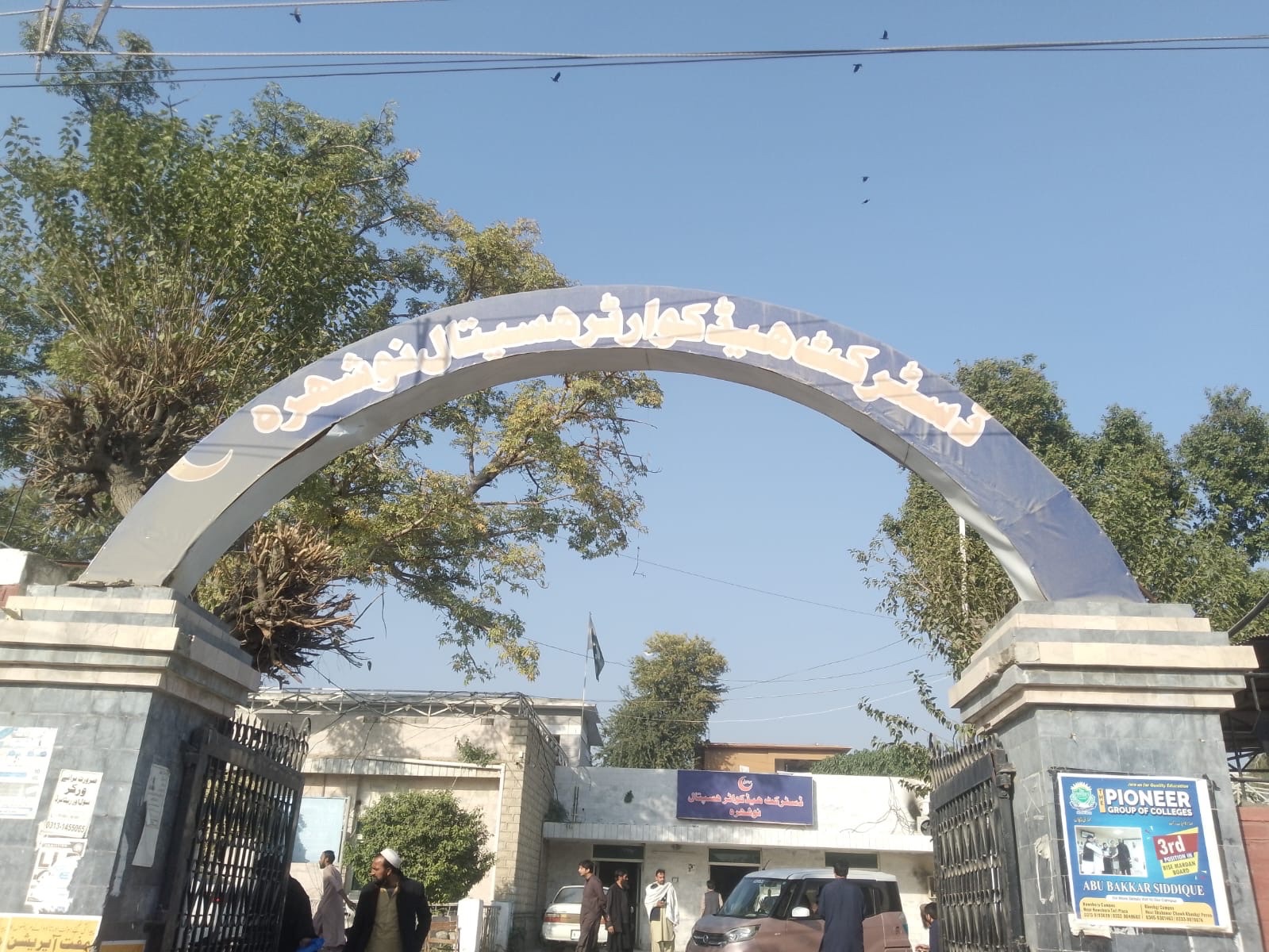
DHQ Hospital Nowshera (Category B)
Serves Nowshera District, providing vital secondary care to an estimated population of 1.7 million.
Bed Strength: 114 beds (main DHQ campus).
Allied Units: Supported by the Pabbi Satellite Emergency Hospital (110 beds) to manage highway trauma and emergency overflows.
Role: Integrates closely with the Nowshera Medical College (NMC) as an instructional and teaching support site.
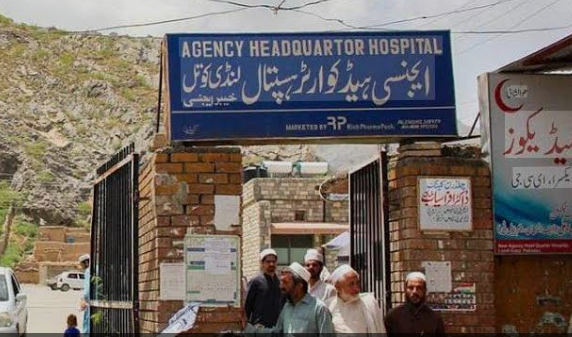
DHQ Hospital Khyber (Landi Kotal — Category A)
Key secondary care facility situated in Landi Kotal, serving the historic Khyber Tribal District and processing cross-border patient flows.
Bed Strength: 350 beds.
Departments: Trauma and Emergency, General Medicine, Pediatrics, Surgery, and a dedicated regional Dialysis Center.
Role: Heavily upgraded during recent post-merger tribal district development packages to provide tertiary-level referrals in a regional setting.
DHQ Hospital Mohmand (Category C)
Main healthcare hub for Mohmand Tribal District, located in Ghalanai.
Bed Strength: 110 beds.
Departments: Basic Specialties (Surgery, Pediatrics, Gynecology), 24/7 Emergency, and local diagnostic facilities.
Status: Undergoing phase-wise revamping under the KP Health Foundation and public-private partnership models to enhance diagnostic machinery and overcome staff shortages.